
Two numbers on the same nameplate, and only one moves the tool
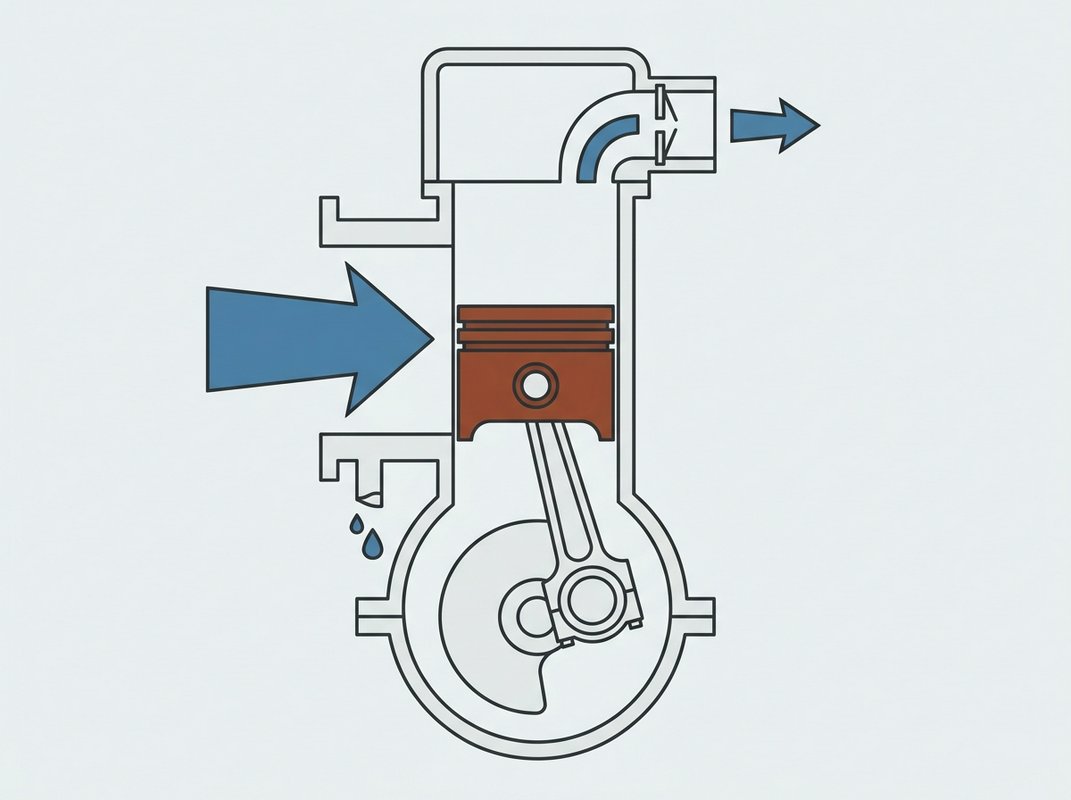
Displacement is the volume swept by the piston or screw element in one minute, worked out from the bore, stroke (or rotor geometry) and running speed alone. It is a figure you can calculate from the machine's dimensions before a single litre of air has actually moved through it.
Free air delivery (FAD) is what the compressor actually puts out at its outlet, measured at atmospheric pressure and temperature but stated at a given working pressure. It is measured because it accounts for everything that happens to the air between the swept volume and the delivery pipe.
Free air delivery is always lower than displacement, and the gap is not a manufacturing fault. It comes from several places at once:
- Clearance volume left in the cylinder or screw casing that never gets pushed out
- Valve or port timing losses, where air leaks back before it is fully delivered
- Internal leakage past piston rings or between screw rotors
- The air heating as it is compressed, which expands its volume and works against the true output
A tool draws free air delivery, so the figure that decides whether a compressor will keep up with an angle grinder or a spray gun is the smaller of the two numbers. Working out what that number needs to be for a given set of tools is a separate calculation from reading it off a nameplate: the Air Demand Calculator takes the tools, quantities and how much of the working hour each one actually draws air, and returns the free air delivery a compressor needs to supply, so that figure can be set against a machine's FAD rather than its displacement.
What ISO 1217 actually tests
ISO 1217 is the international standard for testing compressor performance, and it sets out how a compressor's free air delivery is to be measured. A test run under ISO 1217 fixes the working pressure, the point in the circuit where flow is measured and the way ambient temperature and atmospheric pressure are corrected for, so that a figure produced under the standard means the same thing whoever publishes it.
Why a stated method changes what the number is worth
A flow figure with no test method behind it could have been measured almost anywhere in the compressor's circuit, at almost any pressure, under almost any ambient condition, and none of that is visible from the number itself. A datasheet that names ISO 1217 is telling you the free air delivery was measured at the outlet under fixed conditions, which is what makes it comparable with another maker's figure tested the same way. Two free air delivery figures tested under the standard, at the same working pressure, can be set side by side; two figures with no method stated cannot, even if both are labelled free air delivery.
The standard has more than one annex, covering different compressor types and different acceptance tolerances, so a reference to "ISO 1217" alone is less useful than one that also names the annex the test was run under. Where a listing gives neither the annex nor the tolerance, the free air delivery figure is still worth checking against the working pressure a tool actually needs. Working out that figure for your own tools first, using the Air Demand Calculator, gives you a number to test any listing's claim against.
Where a stated standard does not settle the question
A test standard tells you how a figure was measured. A distributor or the compressor's manufacturer can confirm how those site conditions affect the figure for a specific installation.
Two datasheets, displacement against free air delivery
Both ratios come from a single maker's own datasheet for one specific model, not from an independent test, so treat the figure as a way of reading a listing's headline number rather than a fixed rule that carries across the range. The Air Demand Calculator uses these same two ratios to show, as an illustration only, what displacement a listing would need to show for a given free air delivery.
| Model | Displacement | Free air delivery | Share reaching the outlet |
|---|---|---|---|
| SIP ISBD5.5/270Check whether a listing quotes this displacement figure alone before setting it against a free air delivery figure from a different model. | 666 litres a minute | 439 litres a minute | 66% |
| Hyundai HY3100PThe higher share here reflects a smaller, differently built unit, not better performance, so it is not a like-for-like score against the SIP model. | 396 litres a minute | 300 litres a minute | 76% |
Figures are read from the SIP and Hyundai published datasheets for the exact models named. A different model from either maker, or from another maker, can sit at a different point, so check the datasheet for the specific unit you are pricing.
Reading the headline figure on a compressor listing
A listing's headline number is worth reading twice before it goes anywhere near a sizing calculation. Some makers print free air delivery (the volume of air actually reaching the outlet, measured at atmospheric pressure at a stated working pressure) and some print displacement (the volume the piston or screw sweeps before any losses), and the two numbers can differ enough to leave a tool short of air even though the compressor "on paper" looks big enough.
Working out which figure you're looking at
Check these in order:
- Look for the words themselves. "Free air delivery" or "FAD" points to delivered air; "displacement" or "swept volume" points to the larger, unadjusted figure.
- Check whether a pressure is stated next to the number. A free air delivery figure is meaningless without the working pressure it was measured at, so a flow quoted with no pressure alongside it is a sign the maker has not been precise, whichever term they used.
- Compare the number against the motor power. A given motor size can only move so much air; a flow figure that looks high for the stated kW is often displacement.
- Look for a reference to a test standard such as ISO 1217. A datasheet that cites a test standard is telling you the figure was measured under a defined method, which is worth more than a number with no method behind it.
When the label is missing altogether
Plenty of listings, especially at the budget end, give a single cfm or l/min figure with no indication of which one it is. Where that happens, treat the number as displacement: it is the easier figure for a maker to publish because it comes straight from the bore and stroke, and treating it as the more optimistic figure protects you against undersizing. If you know roughly what your tools draw, the Air Demand Calculator works out the free air delivery a workshop actually needs from the tools, quantities and usage entered against it, all worked in the browser, and shows what displacement a listing would need to show for that demand at two ratios measured on published listings. It's arithmetic on the numbers entered, not a check on any particular compressor, so treat the result as a starting figure to size against rather than a guarantee that a given model will meet it.
Where a maker's own page does state both figures, the ratio between them tells you how much the compressor loses to leakage past the piston or screw, valve inefficiency and heat, and that ratio is worth writing down for any other model from the same range, since a family of compressors sharing a design tends to lose air at a similar rate.
Where to go next
Send the compressor's stated free air delivery and working pressure to distributors when comparing quotes. The guide on getting compressor quotes sets out what figures to send and what to ask for in return.
Put the figures to work
Once you know a listing's ratio, converting between litres per minute, cubic feet per minute, bar and psi is the next step in checking the figures against your own tools.